V6 Hybrid Power Units
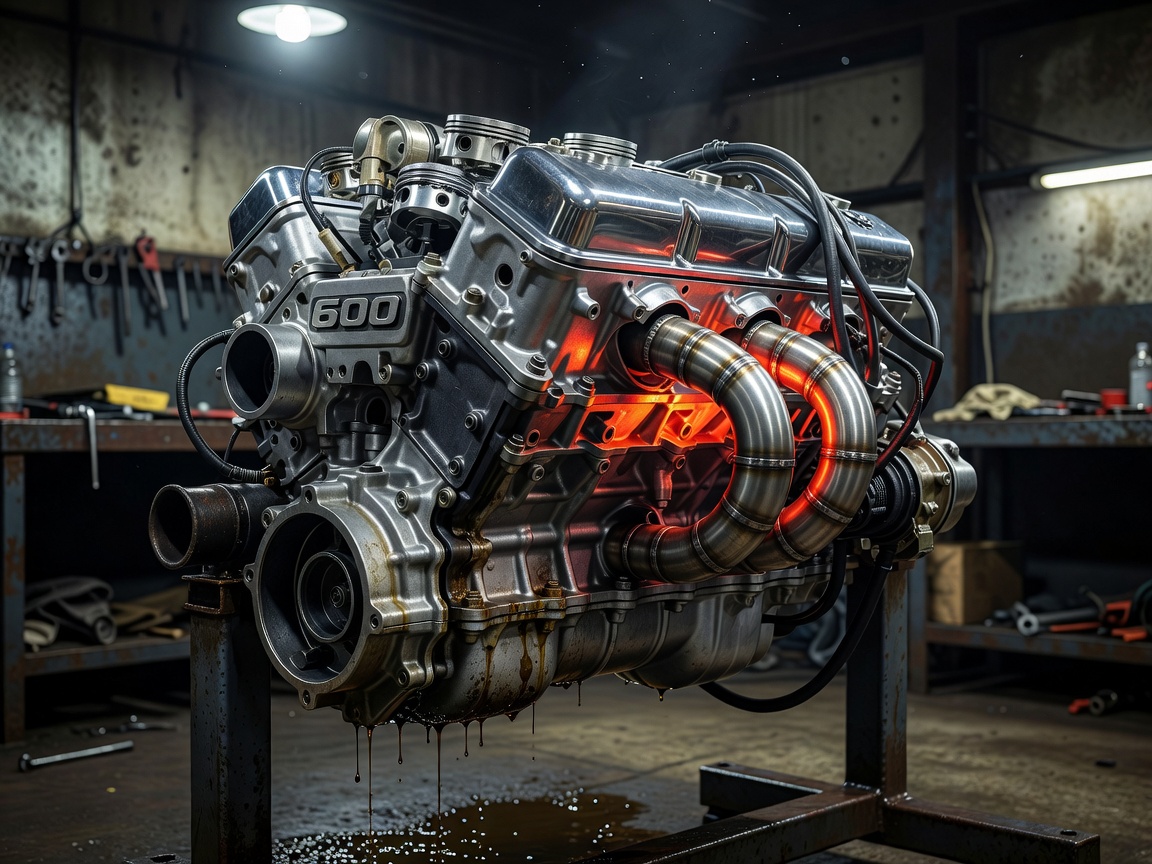
They are no longer referred to as merely "engines." The modern Formula 1 powertrain is officially a Power Unit (PU). Introduced in 2014, these 1.6-litre V6 turbocharged hybrids represent the pinnacle of automotive thermal efficiency. Capable of producing over 1000 horsepower while consuming a strictly regulated 110 kg of fuel per race, the modern PU is a marvel of thermodynamics and electrical engineering.
The Six Pillars of the Power Unit
A Formula 1 Power Unit is composed of six distinct, highly complex elements that work in total synchronization. A failure in one typically compromises the entire system.
1. Internal Combustion Engine (ICE)
At the heart of the system is a diminutive 1.6-litre, 90-degree V6 engine. Despite its small displacement, it revs to a mandated limit of 15,000 RPM (though fuel flow limits mean peak power is usually found closer to 10,500 RPM). It features split-turbo technology, advanced pre-chamber ignition, and achieves a thermal efficiency of over 50%—meaning more than half of the energy inside the petrol is successfully converted into mechanical work (road cars typically hover around 30%).
2. Turbocharger (TC)
An exhaust-driven turbine connected via a shaft to a compressor that forces dense, oxygen-rich air into the engine. Due to the hybrid electrical integration, F1 turbos do not suffer from traditional "turbo lag."
3. Motor Generator Unit - Kinetic (MGU-K)
The MGU-K connects directly to the crankshaft. Under braking, it acts as a generator, harvesting kinetic energy that would otherwise be lost as heat in the carbon brakes. Under acceleration, it acts as a motor, deploying up to 120kW (roughly 160 horsepower) back into the drivetrain.
4. Motor Generator Unit - Heat (MGU-H)
The most complex and expensive part of the PU. The MGU-H is connected to the turbocharger shaft. It harvests heat energy directly from the exhaust gases spinning the turbine. Crucially, energy transfer from the MGU-H to the battery or directly to the MGU-K is unrestricted by the regulations. The MGU-H also acts as an electric motor to spool up the compressor off-throttle, entirely eliminating turbo lag.
5. Energy Store (ES)
The high-voltage lithium-ion battery pack, which must weigh between 20 and 25 kg. It stores the electrical energy harvested by the MGU-K and MGU-H, releasing it exactly when the driver (or the onboard computer) demands it.
6. Control Electronics (CE)
The brain of the operation. Managing the alternating currents from the MGUs, converting them to direct current for the battery, and orchestrating the dance between combustion and electrical deployment millions of times per race.
Deployment and Clipping
Energy management is a critical tactical factor. The MGU-K can only deploy 4 Megajoules (MJ) of energy per lap from the battery. If a driver runs out of electrical deployment on a long straight before reaching the braking zone, this is called "clipping." The car suddenly loses 160 horsepower, acting as a massive aerodynamic parachute against the high drag of the chassis.
| Component | Function | Max Deployment / Limit |
|---|---|---|
| ICE | Combustion Power | 15,000 RPM / 100kg/hr flow |
| MGU-K | Kinetic Harvest & Motor | 120 kW (161 hp) / 4 MJ per lap |
| MGU-H | Exhaust Harvest & Anti-lag | Unlimited transfer to MGU-K |
| Battery (ES) | Energy Storage | Max 4 MJ deploy / 2 MJ harvest (from K) |
The Future: 2026 Regulations
The extraordinary complexity and cost of the MGU-H have acted as a barrier to entry for new automotive manufacturers. For the 2026 season, the FIA has rewritten the PU regulations. The MGU-H will be completely banned, and the electrical output of the MGU-K will be massively increased to 350kW (nearly 470 horsepower), aiming for a 50/50 power split between the ICE and electrical systems. Furthermore, the sport will shift entirely to 100% sustainable synthetic fuels.