Suspension Systems & Hydraulics
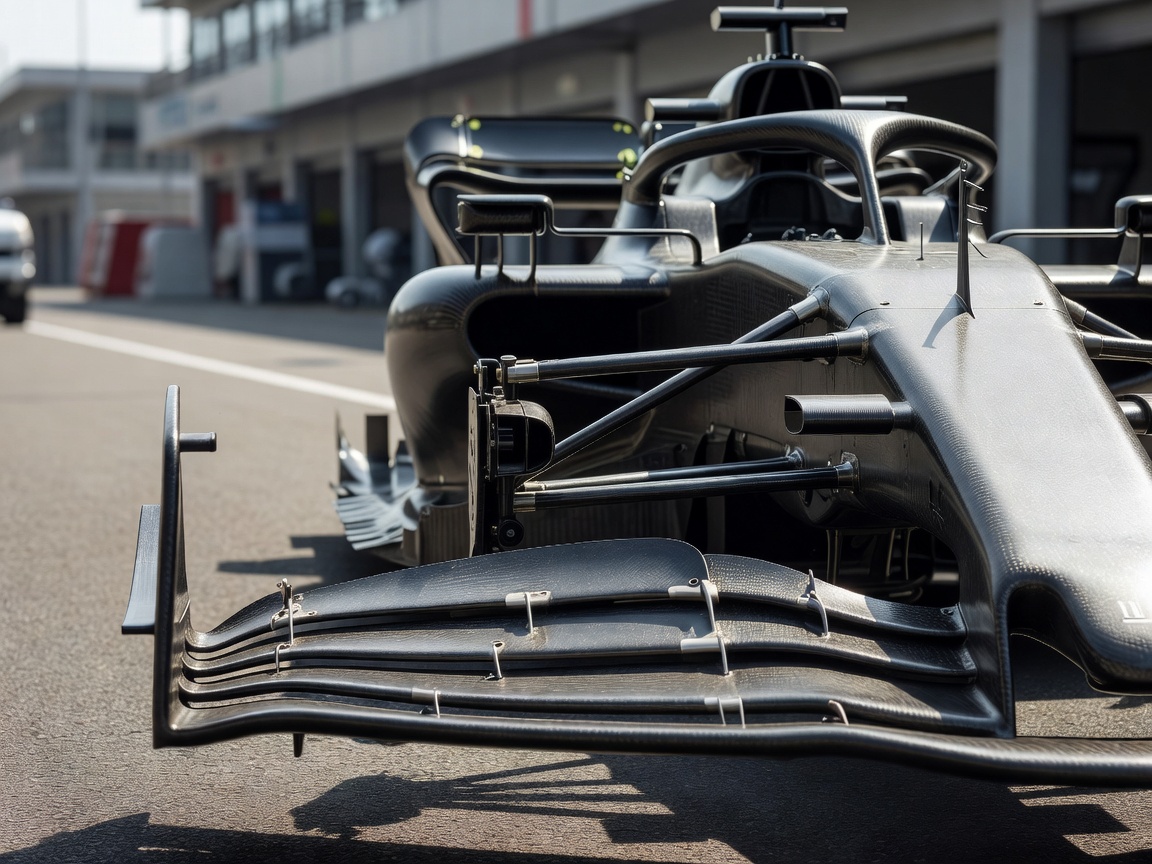
Unlike a road car, where suspension is designed to absorb bumps for passenger comfort, an F1 car's suspension has one primary goal: aerodynamic platform control. Maintaining the floor at an incredibly precise and constant height relative to the track surface is essential for ground effect to work properly.
Push-Rod vs Pull-Rod Dynamics
Modern F1 cars use double wishbone suspension layouts, but the mechanism that connects the wheel hub to the inboard dampers comes in two distinct philosophies:
- Push-Rod: A diagonal rod extends from the lower part of the wheel hub up to the top of the chassis. When the wheel hits a bump, the rod pushes upwards, compressing the rocker and damper springs mounted high in the nosecone. It offers excellent ground clearance and accessible packaging.
- Pull-Rod: A diagonal rod extends from the upper part of the wheel hub down to the bottom of the chassis. When the wheel moves up, it pulls the rod, compressing dampers mounted very low on the floor. This lowers the car’s center of gravity but is mechanically more difficult to package and service.
Teams mix and match these layouts. It is common to see pull-rod front suspension combined with push-rod rear suspension, or vice versa, based entirely on how the suspension arms interact with the aerodynamic airflow.
The Inboard Components
The visible carbon fibre wishbones are only half the story. The magic happens inside the chassis.
Heave Springs (Third Dampers)
When an F1 car accelerates to 300 km/h, the aerodynamic downforce acts like an invisible elephant sitting on the chassis, pushing the entire car downwards. To prevent the floor from scraping the ground, teams use a central "heave" spring. This spring only activates when both the left and right wheels compress simultaneously (as they do under aerodynamic load or heavy braking), providing immense stiffness to resist the downforce.
Anti-Roll Bars
When cornering, centrifugal force causes weight to transfer to the outside wheels, making the car roll. Anti-roll bars connect the left and right suspension geometries. They resist this twisting motion, keeping the aerodynamic platform flat through high-speed sweeps.
| Setup Parameter | Adjustment Effect | Track Suitability |
|---|---|---|
| Stiff Heave Spring | Prevents aerodynamic bottoming out | High-speed tracks (Spa, Monza) |
| Soft Anti-Roll Bar | Increases mechanical grip on low-speed corners | Street circuits (Monaco, Singapore) |
| High Camber Angle | Improves cornering grip but increases tyre wear | High-energy lateral tracks (Suzuka) |
The Ban on Active Suspension
In the early 1990s, teams utilized computerized, hydraulic "active" suspension systems that preemptively adjusted the ride height hundreds of times per second. The FIA banned these systems to reduce costs and maintain the driver's influence over the car. Today, F1 suspension must be strictly mechanical. Fluid systems are allowed for heave dampers, but they must react passively to the track surface, requiring engineers to find a physical compromise between compliance over kerbs and rigid aerodynamic support.