Tyre Compounds & Dynamics
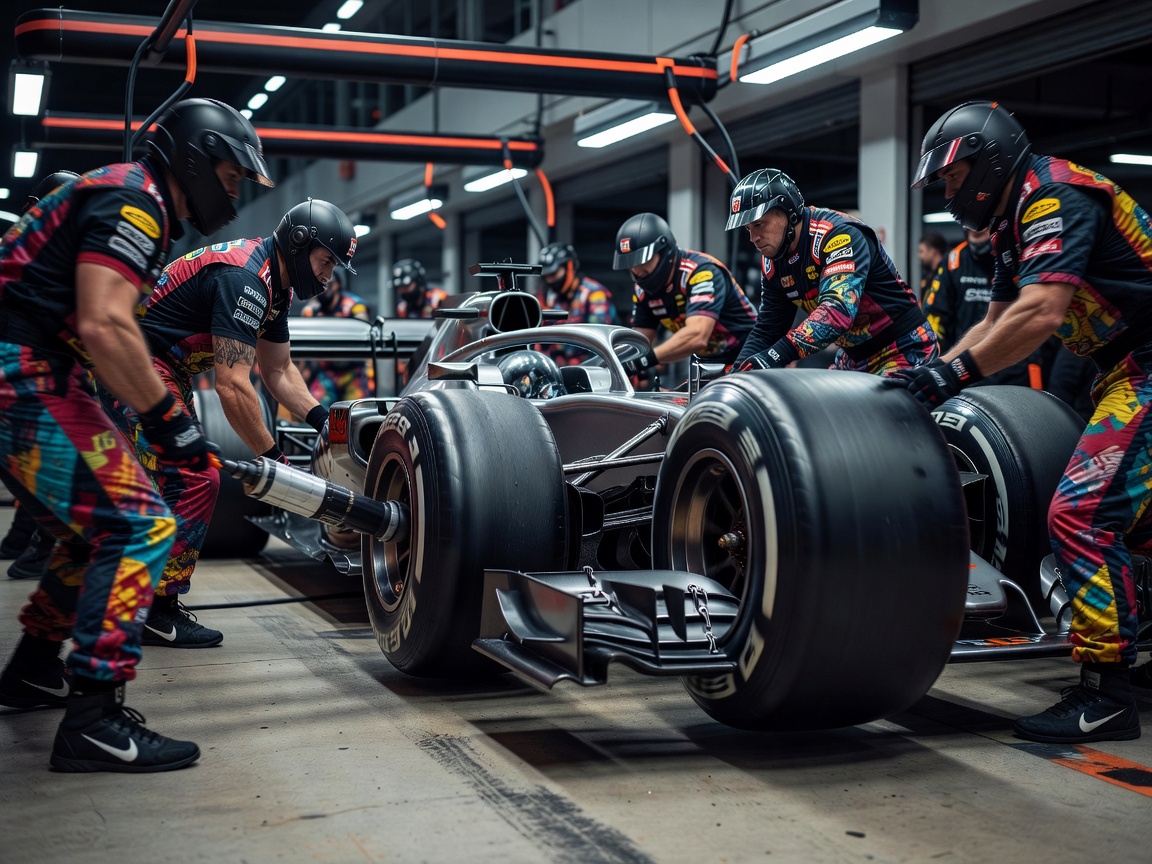
No matter how much downforce a car produces, or how much horsepower the engine outputs, it all funnels through four contact patches—each roughly the size of a piece of A4 paper. Managing Pirelli’s 18-inch slick tyres is a dark art that separates World Champions from the rest of the grid.
The Dry Weather Range
Pirelli, the sole tyre supplier for Formula 1, creates a range of slick dry-weather compounds ranging from C1 (the hardest) to C5 (the softest). For any given Grand Prix weekend, Pirelli selects three compounds from this range. These are designated by colours to aid the audience:
- Soft (Red): The softest tyre of the weekend’s allocation. Provides massive instantaneous grip and the fastest lap times, making it ideal for Qualifying. However, it suffers from rapid thermal degradation and cannot sustain long race stints.
- Medium (Yellow): The balanced choice. Slower to warm up than the Soft, but significantly more durable. It forms the backbone of most race day strategies.
- Hard (White): The most durable tyre. Requires extensive energy to get into its optimal temperature window, making out-laps perilous. Once in the window, it can endure long, high-stress stints with minimal wear.
Wet Weather Options
When the track is damp or heavily flooded, teams transition to treaded tyres designed to clear standing water.
- Intermediate (Green): Designed for a drying track or light rain. The tread pattern can clear up to 30 litres of water per second at 300 km/h. They quickly overheat and degrade if the track becomes fully dry.
- Full Wet (Blue): For extreme monsoon conditions. These tyres feature deep grooves capable of clearing 85 litres of water per second per tyre. The large profile also raises the ride height of the car, preventing the floor from aquaplaning.
Thermal Management & Degradation
Grip is fundamentally a function of temperature. Each compound has a specific operating window, typically ranging between 100°C and 120°C. If the tyre is too cold, the rubber is hard and slides across the tarmac, causing surface "graining." If the tyre is too hot, the rubber begins to melt and blister on a structural level, resulting in severe loss of traction.
Drivers must actively manage tyre temperatures. Heavy braking and high-speed cornering put kinetic energy into the carcass, raising temperatures. Coasting, "lift and coast" techniques, and avoiding kerbs help keep temperatures down. The 2022 switch from 13-inch rims to low-profile 18-inch rims fundamentally changed tyre behaviour. The shorter sidewall means the tyre flexes far less under load, transferring more suspension duties to the mechanical chassis systems.
| Compound | Optimal Temp Window | Primary Use Case | Degradation Profile |
|---|---|---|---|
| C5 (Softest) | 85°C - 110°C | Street circuits (Monaco) | Extreme; falls off a cliff after few laps |
| C3 (Mid-range) | 105°C - 135°C | Standard European circuits | Linear, predictable wear |
| C1 (Hardest) | 110°C - 140°C | High-energy tracks (Silverstone, Suzuka) | Very low, difficult to warm up |
Strategy and Pit Stops
Formula 1 regulations mandate that unless a wet tyre is used, a driver must use at least two different dry compounds during a race. This forces at least one pit stop. The interplay of tyre degradation rates—known as the "crossover point"—dictates race strategy. The "undercut" is a common tactical weapon: pitting earlier than a rival for fresh, high-grip rubber to set a fast out-lap, emerging ahead when the rival eventually stops.